


10 Books to Read If You Love The Man in the High Castle
If you’re captivated by The Man in the High Castle and eager to explore more books like it, you’ve arrived at the perfect list. Philip K. Dick’s classic 1962 novel stands out among alternate history novels by blending dystopian alternate realities, totalitarian dystopian fiction, and speculative historical fiction. To satisfy readers who love its uneasy alternate 1960s world and intricate narratives, we’ve curated 10 Books to Read If You Love The Man in the High Castle that echo its unique style, themes, and speculative depth. These selections span alternate WWII outcomes, oppressive regimes, blurred realities, and philosophical questions—hallmarks of Philip K. Dick style books.
Introduction to The Man in the High Castle and Its Appeal
The Man in the High Castle is Philip K. Dick’s visionary 1962 novel imagining an alternate 1962 where the Axis powers won World War II. In this reconfigured world, Nazi Germany controls the eastern United States, Imperial Japan holds the Pacific Coast, and a neutral buffer zone exists along the Rocky Mountains. The story interweaves characters such as Frank Frink, a secret Jew grappling with identity under threat; Robert Childan, an antique dealer navigating the Japanese obsession with “authentic” Americana; Nobusuke Tagomi, a Japanese trade official caught in political espionage; Juliana Frink, who embarks on a dangerous journey meeting the enigmatic author Hawthorne Abendsen; and Abendsen himself, the elusive creator of the controversial meta-narrative book The Grasshopper Lies Heavy that imagines an Allied victory.
The novel’s appeal lies in its rich world-building, weaving together alternate history novels with detailed political intrigue between rival totalitarian powers. It deftly crafts dystopian alternate realities, showing harsh lives lived under oppressive regimes ravaged by racial hierarchies—from Japanese racial caste systems to Nazi genocidal policies. Its layering of blurred realities, like Tagomi’s visions into our actual timeline and the philosophical weight of The Grasshopper Lies Heavy, draws readers into questioning what is real and what is constructed identity.
This blend of speculative historical fiction and totalitarian dystopian fiction, anchored by complex, morally troubled protagonists, makes The Man in the High Castle a benchmark for Philip K. Dick style books. Fans are drawn to its haunting portrayal of authoritarianism, intricate political machinations, and the personal costs of survival under tyranny.
What Are These Book Recommendations Based On?
The following recommendations have been carefully selected for their resonance with the core features that define The Man in the High Castle. First, they explore alternate history novels with richly imagined speculative historical scenarios—especially those reexamining pivotal moments like WWII or global power shifts.
Second, these books dive into dystopian alternate realities characterized by totalitarian regimes, mirroring the grim Nazi-Japanese world where authoritarianism infects all aspects of life, from daily interactions to geopolitical strategies.
Third, we prioritized narratives and tones matching the distinctive paranoia, philosophical mysticism, and complex characters that hallmark Philip K. Dick style books. Whether through multi-perspective storytelling, surreal elements, or meta-narratives, these works evoke the same questioning of reality and power.
Finally, each novel captures themes crucial to The Man in the High Castle: alternate political outcomes that reshape history, resistance against oppressive regimes, ethical ambiguity under surveillance states, and the fluid boundaries of truth and identity.
If you liked The Man in the High Castle, these books provide further immersive journeys into alternate history novels, totalitarian dystopian fiction, and speculative historical fiction that continue exploring the fragility and resilience of humanity under authoritarian shadows.
10 Books to Read If You Love The Man in the High Castle
1. Fatherland by Robert Harris (1992)
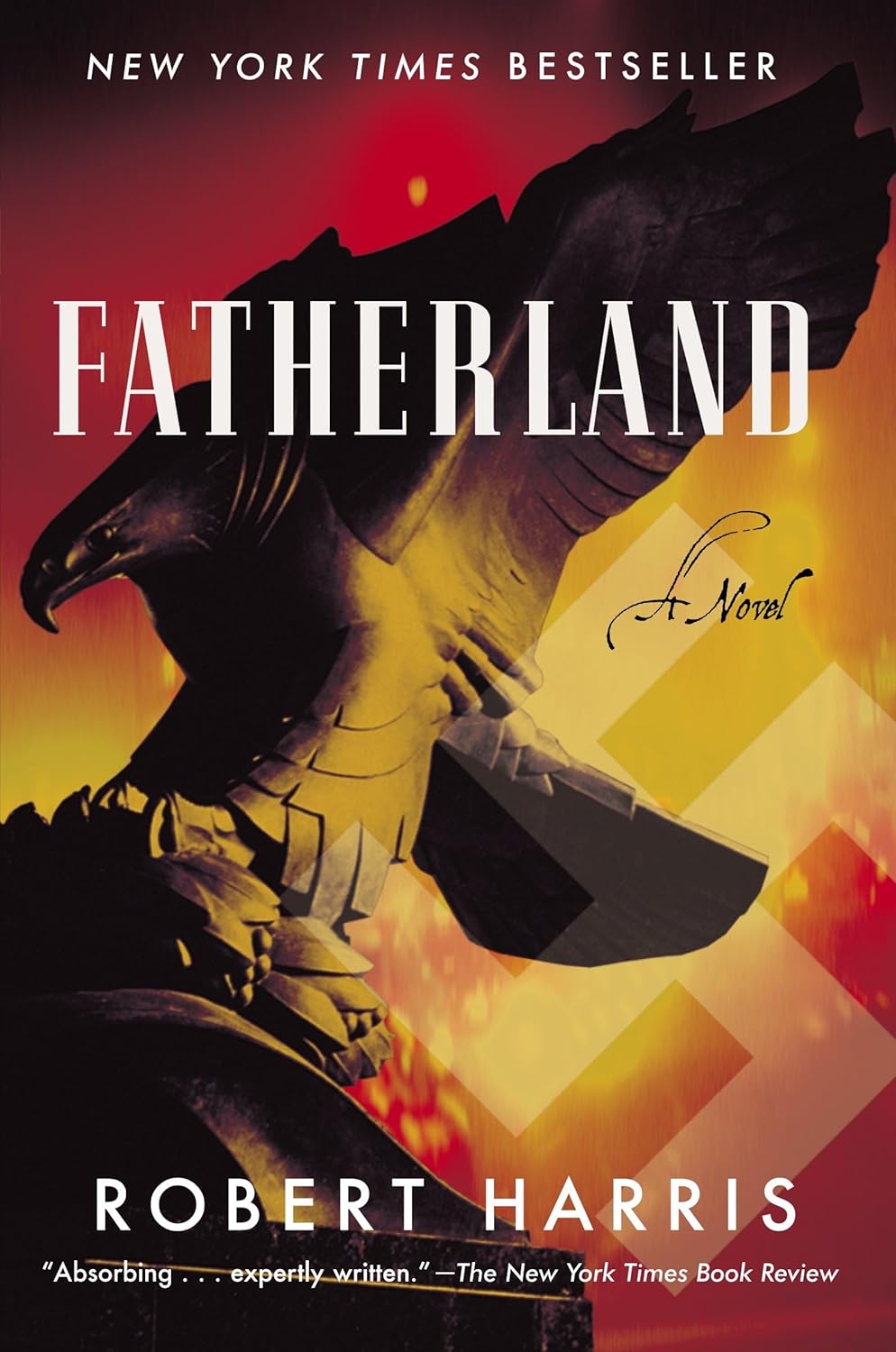
Genre: Alternate history, totalitarian dystopian fiction
Themes: Nazi victory in WWII, oppressive regime in 1960s Germany, Holocaust cover-ups, surveillance, resistance.
One-Sentence Review: A tense detective thriller set in Nazi-ruled Berlin uncovers deep state secrets and atrocities hidden beneath Olympic pageantry.
What You Can Expect from This Book:
- Dystopian 1964 Berlin, where a police investigator stumbles upon a conspiracy concealing the Holocaust after Nazi triumph.
- Paranoid, morally ambiguous narrative echoing Dick’s style of suspicion and blurred ethics.
- Immersive details mixing real Nazi technology with speculative innovations like longevity drugs and global domination.
- Explores “what if” historical distortions and the crushing grip of totalitarian control.
With its detailed alternate reality of Nazi Europe and thriller pacing, Fatherland stands among the best books like The Man in the High Castle, combining rich alternate history novels and totalitarian dystopian fiction for readers intrigued by dark political intrigue and moral complexity.
2. The Plot Against America by Philip Roth (2004)

Genre: Alternate history, speculative historical fiction
Themes: Fascist America under Charles Lindbergh, antisemitism, family resilience, authoritarian shifts.
One-Sentence Review: A Jewish American family witnesses the chilling rise of fascism and racial scapegoating during a Lindbergh presidency.
What You Can Expect from This Book:
- Alternate 1940s United States where Lindbergh replaces FDR, enabling fascist sympathies and antisemitic policies.
- Introspective, character-driven narrative that evokes the existential depth of Philip K. Dick style books.
- Examines societal fractures from isolationism, propaganda, and racial oppression.
- Twists familiar Americana into a speculative nightmare of creeping dictatorship.
Roth’s intimate portrayal of a homeland transformed by fascism echoes The Man in the High Castle’s exploration of occupied territory and moral erosion, making it essential reading for enthusiasts of alternate history novels and speculative historical fiction.
3. SS-GB by Len Deighton (1978)

Genre: Alternate history, dystopian alternate realities
Themes: Nazi-occupied Britain, espionage, collaboration conflict, moral ambiguity.
One-Sentence Review: In 1941 London under Gestapo control, a detective must navigate a treacherous world of spies, collaborators, and secret resistance.
What You Can Expect from This Book:
- A dystopian British Isles ruled by Nazi puppet governments post-Sealion Invasion.
- Spy-thriller elements with ambiguous loyalties reflecting Dick’s style of unstable truths.
- Ethical dilemmas of cooperation versus resistance under totalitarian watchfulness.
- Historical detail fused with speculative dominance and atomic research suspense.
Deighton’s compelling espionage narrative provides gritty insight into an occupied world, mirroring The Man in the High Castle’s tone of tense superpower rivalries and surveillance paranoia present in dystopian alternate realities.
4. The Separation by Christopher Priest (2000)

Genre: Alternate history, speculative historical fiction
Themes: Divergent WWII timelines, twin brothers, blurred realities, peace treaties with Nazis.
One-Sentence Review: Twin pilots find their lives split across timelines where Britain allies with Nazi Germany, unraveling identity and history’s fluid nature.
What You Can Expect from This Book:
- Parallel, nested alternate realities spring from Dunkirk’s different outcomes.
- Metaphysical, philosophical narrative reminiscent of Dick’s reality distortions and dualities.
- Explores fate, personal choice, and the instability of historical memory.
- Detailed historical immersion combined with speculative mysticism and shifting perspectives.
Priest’s layered, reality-questioning story offers the same rich speculative texture found in The Man in the High Castle, making it an essential pick for fans craving complex alternate history novels with philosophical depth.
5. Swastika Night by Katharine Burdekin (1937)

Genre: Dystopian alternate realities, totalitarian dystopian fiction
Themes: Far-future Nazi dictatorship, patriarchal oppression, history erased.
One-Sentence Review: In a terrifying vision of a global Nazi Reich centuries later, forbidden knowledge challenges a regime built on myth.
What You Can Expect from This Book:
- A brutal dystopian world shaped by eugenics, misogyny, and mythic worship of Hitler’s legacy.
- A prescient, warning tone akin to Dick’s prophetic speculative visions.
- Critically examines the construction of authoritarian mythologies and the suppression of truth.
- Vivid, imaginative world-building predating WWII but chillingly relevant to totalitarian fantasies.
Burdekin’s prophetic dystopia amplifies The Man in the High Castle’s exploration of oppressive regimes and forgotten histories, providing a cautionary totalitarian dystopian fiction classic.
6. Making History by Stephen Fry (1996)

Genre: Alternate history, speculative historical fiction
Themes: Time travel, preventing Hitler, paradoxes, ethical consequences.
One-Sentence Review: Attempting to stop Hitler’s birth results in an even darker timeline, blending humor and historical speculation.
What You Can Expect from This Book:
- A speculative twist altering history to create a rival totalitarian future Britain under Nazi-like rulers.
- Intellectual, witty prose with paradoxical twists reminiscent of the speculative questioning in Philip K. Dick style books.
- Satire on history’s fragility and the unintended consequences of intervention.
- Combines detailed historical knowledge with playful speculative flights.
Fry’s clever take on causality and historical meddling resonates strongly with The Man in the High Castle’s themes of alternate pasts and moral ambiguity, a must for fans of innovative alternate history novels.
7. Dominion by C.J. Sansom (2012)

Genre: Alternate history, totalitarian dystopian fiction
Themes: Fascist Britain collaborating with Nazis, resistance, ethical conflict.
One-Sentence Review: A fugitive scientist races against time in a 1950s UK under Nazi sway, highlighting underground resistance and moral peril.
What You Can Expect from This Book:
- A dystopian Britain where the government collaborates with Nazi Germany after military defeat.
- Complex plotting and moral quandaries echo Dick’s blend of intrigue and philosophical tension.
- Explores societal costs of collaboration, resistance movements, and ethical compromises.
- Richly detailed 1950s settings interwoven with speculative science and political unrest.
Sansom’s gripping narrative of occupation and defiance captures the essence of The Man in the High Castle, making it an outstanding choice for readers of totalitarian dystopian fiction and alternate history novels alike.
8. 11/22/63 by Stephen King (2011)

Genre: Alternate history, speculative historical fiction
Themes: Time travel, JFK assassination prevention, butterfly effects, authoritarian timelines.
One-Sentence Review: A man’s mission to stop Kennedy’s assassination leads to fractured realities and unexpected dystopian futures.
What You Can Expect from This Book:
- Time travel portal transporting the protagonist to late 1950s America to alter history.
- Intense character-driven story with reality-bending consequences reflecting Dick’s speculative masterworks.
- Deep exploration of historical cause and effect, with warnings about unintended dystopian outcomes.
- Meticulous 1960s period detail blended with speculative alternate futures.
King’s richly woven tale of time and consequence complements The Man in the High Castle’s engagement with reality’s fragility and speculative history, delivering a compelling read for fans of Philip K. Dick style books.
9. The Years of Rice and Salt by Kim Stanley Robinson (2002)

Genre: Alternate history, dystopian alternate realities
Themes: Black Death devastates Europe, Asian global dominance, reincarnation, cyclical history.
One-Sentence Review: Exploring a world where Europe was wiped out, Robinson chronicles vast empires, philosophical revolutions, and repeating souls.
What You Can Expect from This Book:
- A panoramic alternate reality stretching from the 14th century to a speculative future, dominated by Islamic and Chinese cultures.
- Epic, philosophical storytelling with mystical and cyclical themes akin to Dick’s speculative mysticism.
- In-depth consideration of empire, culture, and resilience across centuries.
- Monumental world-building blending real history with sweeping alternate trajectories.
Robinson’s ambitious scope and philosophical depth match the expansive speculation found in The Man in the High Castle, ideal for readers drawn to epic alternate history novels and dystopian alternate realities.
10. Pavane by Keith Roberts (1968)

Genre: Alternate history, speculative historical fiction
Themes: Theocratic stagnation, technological suppression, feudal dystopia.
One-Sentence Review: A collection of novellas set in a 1968 England ruled by the Catholic Church, where science and progress are forcibly halted.
What You Can Expect from This Book:
- An alternate history where the Spanish Armada succeeded, plunging England into a medieval, papal state.
- Poetic, fragmented narrative style evoking Dick’s introspective and atmosphere-rich storytelling.
- Examination of technological absence and its impact on society and individual freedoms.
- Lyrical, immersive world-building with bleak religious authoritarianism.
Roberts’ vision of cultural reversal and oppressive control complements The Man in the High Castle’s interest in societal transformations under totalitarian rule, making this a unique gem among Philip K. Dick style books.
Conclusion
Exploring books like The Man in the High Castle broadens appreciation for how alternate history novels and dystopian alternate realities expose the fragility of authoritarian regimes, the uncertainty of history, and the endurance of human morality. This curated list of 10 Books to Read If You Love The Man in the High Castle offers a spectrum of Philip K. Dick style books that weave speculative historical fiction with totalitarian dystopian fiction, combining political intrigue, ethical ambiguity, and metaphysical questioning.
Each book deepens our understanding of how one pivotal change in history can ripple through society, blurring reality and challenging identity much like Dick’s masterpiece. For readers fascinated by layered narratives and reimagined pasts, these selections provide rich, provocative engagement with some of speculative fiction’s most compelling alternative worlds.
Dive into these titles to continue the journey through alternative timelines, political oppression, and speculative mysteries against the haunting backdrop of history rewritten.


