


10 Books to Read If You Love Seveneves
Exploring Neal Stephenson Read-Alikes and Hard Sci-Fi Space Survival Fiction
Neal Stephenson’s Seveneves is a standout 2015 bestseller in the realm of hard science fiction and space survival fiction. Its gripping premise—the catastrophic fragmentation of the Moon and humanity’s desperate, scientifically complex effort to survive in Earth’s orbit before the planet becomes uninhabitable—hooks readers who crave immersive, intellectually rigorous stories.
Seveneves is a hybrid masterpiece that blends hard sci-fi detail with a sprawling space survival narrative. It appeals to fans who want large-scale, multi-generational storytelling filled with plausible science, engineering challenges, and socio-political examination of disaster and survival. If you’re searching for books like Seveneves or Neal Stephenson read-alikes that echo these qualities, this blog post provides a curated list of the 10 Books to Read If You Love Seveneves.
What These Book Recommendations Are Based On
All recommended titles here mirror the tone, genre, and major themes found in Seveneves. They prioritize hard sci-fi novels known for technical accuracy and a strong foundation in scientific detail. You won’t find escapist space operas or melodramatic disaster tales devoid of rigor.
Instead, these books focus on space survival fiction or narratives of civilization-scale catastrophes that involve plausible scientific and engineering challenges. Many feature sweeping, often multi-generational storylines that showcase humanity’s endurance, ingenuity, and social complexity under extreme conditions.
In short, this list is designed for readers who want a blend of intellectual rigor and drama—books that provide the cerebral satisfaction of solving complex technical problems while delivering epic narratives on par with Neal Stephenson’s storytelling style.
1. Aurora by Kim Stanley Robinson (2015)

Genre: Hard science fiction, generation-ship narrative
Themes: Realistic interstellar travel, closed-loop ecology, human adaptability, moral implications of space colonization
One-Sentence Review: A meticulously rendered, sobering account of engineering and ecological challenges aboard a generation ship that questions humanity’s readiness for deep space survival.
What You Can Expect:
- In-depth exploration of closed ecological systems and propulsion technologies, highlighting the technical rigor characteristic of top-tier hard sci-fi novels.
- Slow-paced, character-driven problem solving constrained by real scientific and technological limitations.
- Philosophical reflections on sustainability, home, and the moral costs of long-term space voyages.
Aurora is the perfect choice for fans of Seveneves who appreciate Neal Stephenson read-alikes with deep technical seriousness and a focus on survival systems. If you want a hard sci-fi novel that delves into the ecological and engineering realities of space survival, this book stands out.
2. The Expanse (Leviathan Wakes) by James S. A. Corey (2011) (Book 1)
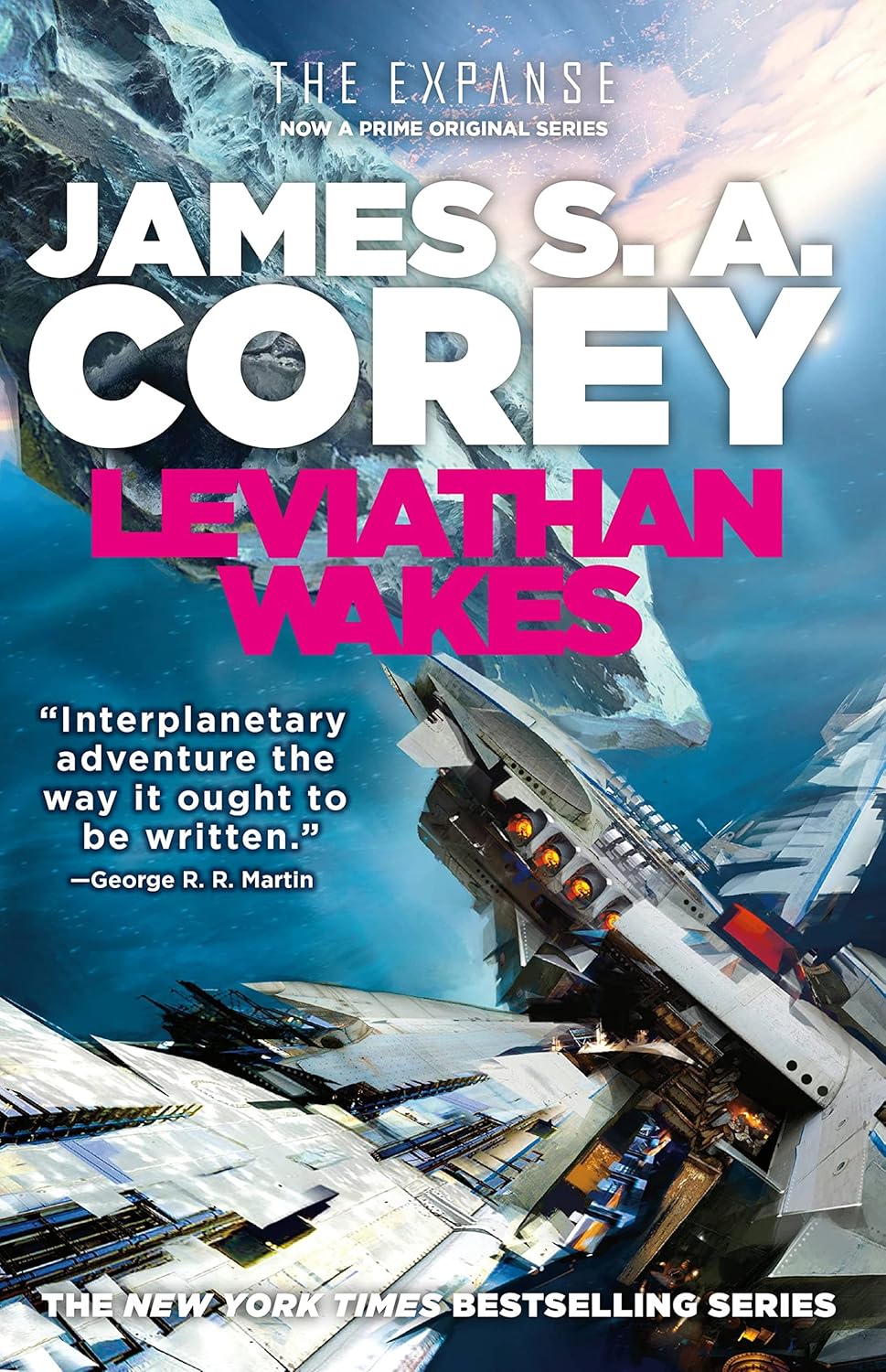
Genre: Science fiction, space opera with near-future realism
Themes: Interplanetary political conflict, resource scarcity, engineering problem-solving, human endurance
One-Sentence Review: A character-rich and fast-paced series start blending plausible science with intense survival drama and political intrigue in space.
What You Can Expect:
- Realistic depictions of orbital mechanics and engineering challenges that remain accessible for newcomers to hard sci-fi novels.
- An ensemble cast navigating rising geopolitical tensions across the solar system.
- High-stakes space survival grounded in scientific plausibility.
If you want your space survival fiction with a dose of action and political complexity alongside technical authenticity, The Expanse is a natural follow-up to Seveneves. It appeals to fans looking for Neal Stephenson read-alikes with dramatic, politically charged storytelling.
3. The Three-Body Problem by Cixin Liu (2008) (English Translation 2014)

Genre: Hard science fiction, cosmic first-contact epic
Themes: Astrophysics, civilizational risk, scientific method in the face of existential threats
One-Sentence Review: A sprawling, intellectually ambitious novel combining advanced physics concepts with civilization-scale survival stakes.
What You Can Expect:
- Dense and challenging scientific ideas, presented rigorously across astrophysics and theoretical physics.
- Human institutions struggling to respond effectively to cosmic-level dangers beyond full comprehension.
- A tone of awe-inspiring scale and dread, comparable to Seveneves’ epic narrative sweep.
For readers seeking cerebral, high-concept hard sci-fi novels with themes of existential risk and scientific exploration, The Three-Body Problem fits perfectly among books like Seveneves that challenge the mind and imagination alike.
4. Contact by Carl Sagan (1985)

Genre: Hard science fiction, first contact narrative
Themes: Scientific exploration, institutional response, humanism amid cosmic discovery
One-Sentence Review: A thoughtful, scientifically literate story depicting humanity’s reaction to extraterrestrial communication, blending technical detail with rich emotional depth.
What You Can Expect:
- Clear and accessible explanations of scientific methods and engineering challenges involved in decoding and responding to alien signals.
- A focus on the roles of bureaucracy, institutions, and human values during unprecedented cosmic events.
- Philosophical questions about human meaning and connection grounded in plausible science.
Contact is excellent for Seveneves fans who appreciate the balance of hard science and emotional, institutional human drama common to quality space survival fiction within hard sci-fi novels.
5. The Road by Cormac McCarthy (2006)

Genre: Post-apocalyptic literary fiction
Themes: Human survival, parental bonds, ethical choices amid societal collapse
One-Sentence Review: A stark, emotionally powerful narrative about survival and moral complexity after civilization ends—focusing on psychological depth rather than technical detail.
What You Can Expect:
- Sparse yet intense prose emphasizing the human psyche and emotional struggles in a devastated world.
- An intimate portrayal centered on a father-son relationship against the backdrop of societal collapse.
- Virtually no scientific or technological exposition; instead, a strong focus on human consequence and resilience.
Recommended for those who want the emotional and ethical depth of space survival fiction but with minimal science or engineering focus. It expands the thematic range for readers of books like Seveneves.
6. Exodus / Earth Abides (Classic Option) by Arthur C. Clarke / George R. Stewart (1950)

Genre: Classic speculative fiction; hard science fiction and post-apocalyptic literature
Themes: Civilization rebuilding, cultural evolution, scientific reasoning regarding societal collapse
One-Sentence Review: Foundational works exploring the endurance and reconstruction of civilization, providing a historical context for Seveneves’ modern catastrophe survival narrative.
What You Can Expect:
- Broad, big-picture portrayals of societal and cultural adaptations following collapse.
- Varying levels of technical detail depending on the work (Clarke’s work usually emphasizes more science; Stewart’s focuses on social evolution).
- Insight into earlier speculative fiction treatments of themes Stephenson later modernized.
These classics help place Seveneves within the broad lineage of speculative survival fiction, offering valuable context and highlighting the evolution of hard sci-fi novels and books like Seveneves.
7. Perdido Street Station by China Miéville (2000)

Genre: New weird speculative fiction with rich worldbuilding
Themes: Scientific hubris, social stratification, speculative technology, and biology
One-Sentence Review: A dense, imaginative novel weaving speculative invention with social commentary and elaborate worldcraft.
What You Can Expect:
- Inventive, complex systems fusing speculative science and biotechnology.
- Dark, layered social environments reflecting class and political conflict like Stephenson’s complex societies.
- Less focus on traditional hard physics but heavy on original speculative systems and cultural depth.
For readers craving intricately created speculative worlds and social complexity similar to Seveneves, Perdido Street Station offers richly imagined systems and cultural commentary. It’s a recommended pick among Neal Stephenson read-alikes and books like Seveneves.
8. The Martian by Andy Weir (2011)

Genre: Hard science fiction, space survival on Mars
Themes: Engineering improvisation, problem-solving, humor under pressure
One-Sentence Review: A nail-biting, technically grounded survival story highlighting pragmatic engineering and human ingenuity on an alien planet.
What You Can Expect:
- Stepwise engineering problem-solving using verifiable scientific principles.
- A relatable, resourceful protagonist whose scientific know-how drives the narrative.
- Fast-paced survival fiction woven with clear hard sci-fi elements.
The Martian is the most direct match for Seveneves readers wanting action-oriented, scientifically rigorous space survival fiction. It exemplifies the blend of engineering puzzles and human resilience found in the best hard sci-fi novels.
9. Dark Matter By Blake Crouch’s (2016 / 2019)

Genre: Thriller with speculative science elements
Themes: Identity, technological consequences, societal ripple effects from scientific advances
One-Sentence Review: High-concept speculative thrillers that explore the emotional and societal impact of advanced technology and catastrophe.
What You Can Expect:
- Page-turning, fast-paced narratives propelled by cutting-edge scientific ideas.
- Emotional immediacy mixed with speculative technology exploration.
- Less detailed engineering or hard science compared to Seveneves but strong story propulsion.
Recommended for readers seeking intense, scientifically flavored thrillers that emphasize speculative consequences over engineering minutia. A strong pick among hard sci-fi novels and books like Seveneves for those who want suspense-driven speculative fiction.
10. Children of Time by Adrian Tchaikovsky (2015)

Genre: Hard science fiction, evolutionary/speculative epic
Themes: Evolution, civilization development, long-term survival
One-Sentence Review: A sweeping, multi-perspective narrative examining evolution and survival through the lens of both humans and uplifted nonhuman intelligences.
What You Can Expect:
- Multi-generational storytelling with thorough speculative biology and evolutionary theory.
- Rigorous worldbuilding spanning eons and developing civilizations.
- Reflections on how survival pressures redefine “humanity” and intelligence.
Children of Time is ideal for Seveneves fans fascinated by expansive timelines and biological-cultural evolution under survival stresses. It’s an outstanding addition to the realm of hard sci-fi novels and space survival fiction lovers looking for books like Seveneves.
Conclusion
Seveneves stands out as a rare blend of hard science fiction and large-scale space survival fiction, weaving together technical rigor, dramatic survival stakes, and sweeping multi-generational narratives. The 10 Books to Read If You Love Seveneves compiled here reflect the varied but deeply connected elements that make Stephenson’s novel so compelling.
From intricately detailed engineering problem-solving in The Martian and Aurora, through the civilizational stakes of The Three-Body Problem and Children of Time, to thoughtful socio-political examinations in Contact and classic speculative fiction, these titles deliver on the promises of intellectual depth and dramatic scope.
For fans of Neal Stephenson seeking Neal Stephenson read-alikes or new books like Seveneves, this list offers a robust cross-section of hard sci-fi novels and space survival fiction sure to satisfy your craving for immersive, thrilling, and scientifically grounded storytelling. Explore these works to continue your journey into the best that speculative fiction has to offer.
Dive into these fascinating reads and keep your love for scientifically rich, high-stakes space survival fiction alive and thriving.


