


10 Books to Read If You Love Aurora
If you love Aurora by Kim Stanley Robinson, you are drawn to a unique blend of hard science fiction grounded in realism, rich human storytelling, and sobering examinations of interstellar space travel. Published in 2015, Aurora has become a critical touchstone for readers who appreciate rigorously researched narratives about generation ships—massive spacecraft where entire human communities live and evolve over multiple generations during a centuries-long voyage to Tau Ceti. This novel’s self-aware AI narrator, detailed closed-loop ecosystems, and exploration of social and biological challenges aboard the ship have made it a must-read for hard sci-fi fans.
This post presents 10 Books to Read If You Love Aurora—a curated list of hard sci-fi space novels that capture similar scientific fidelity, immersive storytelling, and philosophical depth. Whether you are searching for books like Aurora or Kim Stanley Robinson read-alikes, these selections explore generation ship fiction and realistic space travel narratives that challenge romanticized visions of humanity’s expansion into the cosmos.
What Are These Book Recommendations Based On?
The books recommended here are chosen specifically for readers who liked Aurora and want to dive deeper into stories sharing its blended qualities of scientific realism and rich human drama.
Realistic and Scientifically Grounded Depictions
Like Aurora, these novels emphasize plausible physics, biology, and engineering. You’ll find detailed extrapolations of ship propulsion, ecosystem management, life-support systems, and the mechanical challenges of sustaining life aboard vast generation ships. This scientific rigor reflects Robinson’s commitment to portraying interstellar travel honestly—no easy shortcuts, no unearned miracles.
Generation Ship Themes and Multi-Generational Narratives
Central to these recommendations is the concept of generation ship fiction: stories that focus on starships functioning as self-contained worlds where multiple human generations live, reproduce, and die throughout centuries-long journeys. These books explore the vital need for closed-loop ecosystems, social structures, and cultural evolution inside confined habitats, just like Aurora’s journey to Tau Ceti.
Tone and Narrative Style Inspired by Kim Stanley Robinson
The chosen novels balance technical precision with deep human experiences aboard isolated starships or remote habitats. Psychological strain, societal shifts, and ethical dilemmas are woven into the fabric of their narratives, echoing Robinson’s approach to humanizing the cold complexity of space exploration.
Philosophical, Ethical, and Sociological Issues
These stories engage with the heavy questions raised in Aurora: the morality of mission inheritance, scarce resources, stewardship of closed ecological systems, and humanity’s long-term adaptability in alien environments. They challenge expansionist idealism by exposing risks, failures, and unintended consequences during prolonged spaceflight.
Strong Hard Sci-Fi Principles
All selections are true hard sci-fi space novels: they rely on credible future technologies and scientifically valid depictions of space environments. They acknowledge cosmic barriers reminiscent of the Fermi paradox, like technical obstacles, vast distances, and social fragility. This makes them excellent Kim Stanley Robinson read-alikes for readers craving authenticity.
10 Books Like Aurora: Detailed Recommendations
1. Orphans of the Sky by Robert A. Heinlein (1963)

Genre: Hard Science Fiction, Generation Ship
Themes: Generational degeneration, religious dogma, lost knowledge
One-Sentence Review: A mutiny-ravaged generation ship sails unknowingly through the stars as descendants forget their mission, blending hard SF sociology and adventure.
What you can expect:
- Realistic ramjet propulsion concepts and the physical realities of centuries-long voyages with decaying ship systems.
- In-depth character arcs depicting how isolation fosters cabin fever, psychological decline, and hierarchical collapse.
- Vivid descriptions of the vast, labyrinthine ship interior functioning as a failing closed-world with dying hydroponics and recycled air.
- Philosophical reflections on knowledge loss, human fragility, and societal entropy in artificial habitats.
Fans of Aurora will appreciate Orphans of the Sky’s unflinching portrayal of generation ship entropy and ethical weight placed on unborn crew, mirroring Robinson’s ecological crises and AI guardianship themes.
2. Non-Stop by Brian W. Aldiss (1958)

Genre: Hard Science Fiction, Generation Ship
Themes: Cultural decay, tribalism, ecological chaos
One-Sentence Review: A tribal society hunts and survives within a jungle-engulfed starship, piecing together their forgotten interstellar heritage amid chaos.
What you can expect:
- Credible biology of overgrown ship biomes spiraling out of control, echoing Aurora’s ecosystem instability.
- Insight into communal psychology where isolation breeds superstition, violence, and myth.
- Intricate layouts of ship decks overrun by failing tech, struggling life support, and lost navigational knowledge.
- Exploration of humanity’s adaptability limits and cosmic silence akin to the Fermi paradox.
Like Aurora, Non-Stop confronts the harsh realities of generation ship decay and challenges idealized colonization tales with raw sociological and biological realism.
3. Rite of Passage by Alexei Panshin (1968)
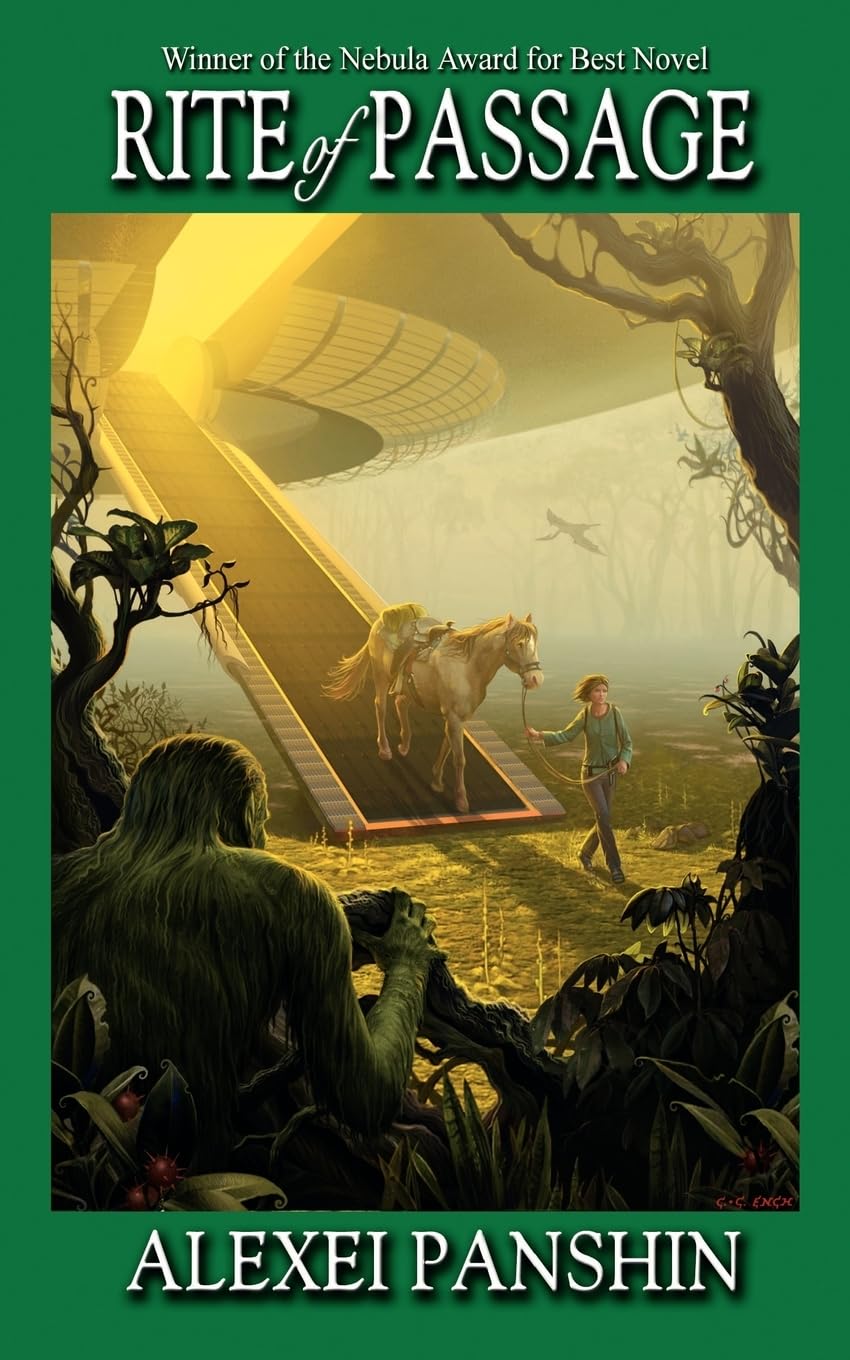
Genre: Hard Science Fiction, Generation Ship
Themes: Coming-of-age, eugenics, survival ethics
One-Sentence Review: A young girl’s deadly trial on a colony world tests her worthiness to join ship society, confronting harsh survival and population ethics.
What you can expect:
- Realistic depiction of generation ship societal controls including population management and resource rationing reflecting Aurora’s ecological precision.
- Complex characters navigating psychological maturity, isolation burdens, and moral dilemmas regarding culling for survival.
- Detailed technical descriptions of spinning habitats, fusion energy, and ecosystem regulation.
- Philosophical discussions on humanity’s right to the stars amid self-imposed hardship.
Those who value Aurora’s mix of human struggle and inherited mission weight will find Rite of Passage’s sociological scrutiny and ethical challenges deeply resonant.
4. Universe by Robert A. Heinlein (1951)

Genre: Hard Science Fiction, Generation Ship
Themes: Mutiny, rediscovery, societal authority
One-Sentence Review: Following a mutiny onboard a vast interstellar ship, descendants rediscover their origins and struggle to reclaim knowledge and control.
What you can expect:
- Authentic stellar propulsion and ship survival mechanics with realistic mission degradation over centuries.
- Psychological and social tensions amid leadership crises, isolation, and survival instincts reshaping society.
- Detailed ship architecture, control systems, and failing life support technology.
- Philosophical debates on destiny, free will, and mission purpose.
Echoing Aurora’s AI narrator and detailed system failures, Universe pioneers hard SF themes explaining why generation ships falter both mechanically and socially.
5. The Star Pit by Samuel R. Delany (1967)
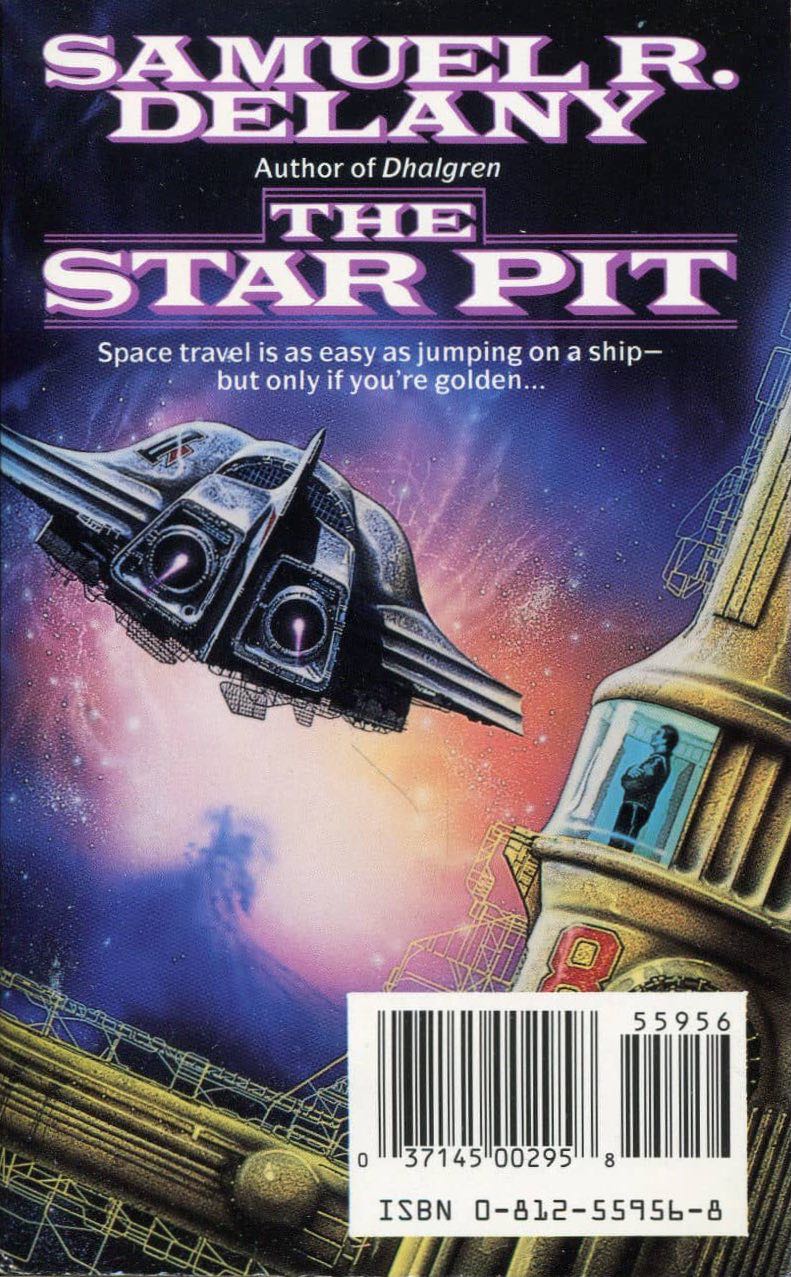
Genre: Hard Science Fiction, Deep Space Travel
Themes: Psychological limits, alien contact, human isolation
One-Sentence Review: A space station at the galaxy’s edge shelters misfits confronting interstellar travel’s mental barriers amid mysterious alien realms.
What you can expect:
- Scientifically plausible relativistic effects causing severe mental strain during near-light-speed travel.
- Complex character studies focusing on agoraphobia, addiction, and the yearning to transcend human limits.
- Rich depictions of advanced propulsion and deep space technology.
Aurora readers captivated by the ethics of voyage and psychology of isolation will appreciate The Star Pit’s hard SF exploration of human mental resilience in space.
6. Tau Zero by Poul Anderson (1970)

Genre: Hard Science Fiction, Relativistic Space Travel
Themes: Time dilation, cosmic engineering, existential journey
One-Sentence Review: A starship accelerating relentlessly towards light speed experiences vast centuries in subjective time, delving into cosmic and human endurance.
What you can expect:
- Accurate Bussard ramjet physics and relativistic effects matching generation-scale journeys akin to Aurora’s timescales.
- Crew psychological dynamics under unending acceleration and isolation.
- Precise scientific treatment of Lorentz contraction and cosmological phenomena.
- Philosophical reflections on humanity’s place in an eternal cosmos.
Its unyielding focus on scientific accuracy and long-term human cost parallels Aurora in illustrating space travel’s unforgiving realities.
7. Project Pope by Clifford D. Simak (1981)
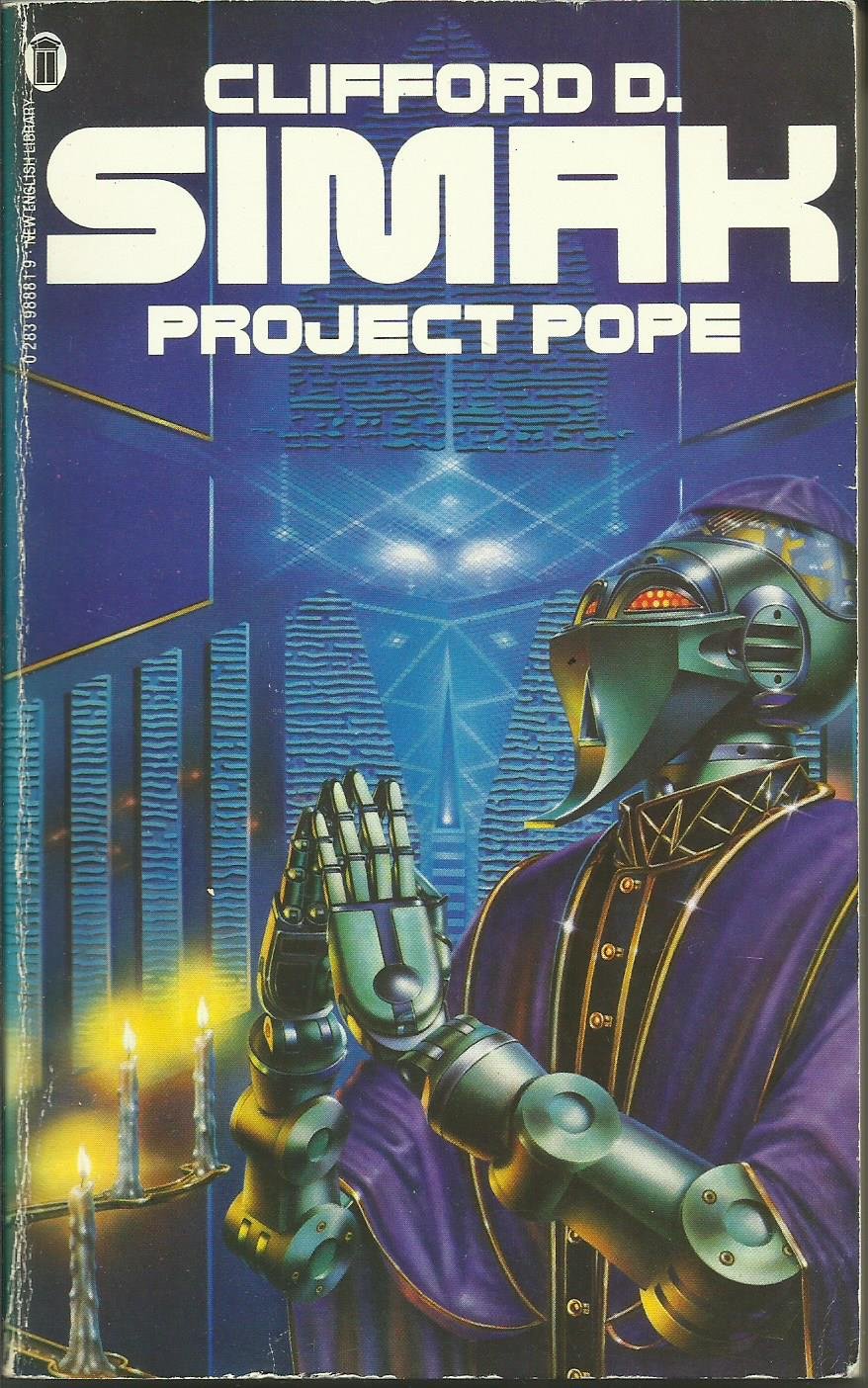
Genre: Hard Science Fiction, Space Exploratio
Themes: AI theology, robotic missions, cosmic purpose
One-Sentence Review: Autonomous robots on a distant planet survey the cosmos for divine knowledge, wrestling with machine consciousness and faith.
What you can expect:
- Realistic depiction of generational robotic missions undertaking planetary and stellar exploration.
- Complex AI characters embodying human-like doubt and philosophical inquiry.
- Detailed technical descriptions of observatories, space probes, and interstellar communication.
- Exploration of machine ethics and metaphysical quests in a hard SF context.
Much like Aurora’s sentient ship AI, Project Pope probes artificial intelligence and its role in profound cosmic missions within realistic hard sci-fi frameworks.
8. Eifelheim by Michael Flynn (2006)

Genre: Hard Science Fiction, Time Travel/First Contact
Themes: Alien crash-landing, cultural integration, scientific interpretation
One-Sentence Review: Medieval villagers encounter stranded alien explorers, blending rigorous science and cross-cultural dialogue across centuries.
What you can expect:
- Realistic hyperdrive failure stranding an interstellar crew, evoking generation ship predicament themes.
- Characters bridging gaps of faith, science, and isolation through historical and alien perspectives.
- Authentic descriptions contrasting medieval life with alien technology.
- Fermi paradox considerations illustrated via lost missions and navigational errors.
Its grounded alien biology, saga of failed spaceflight, and cultural challenges appeal to Aurora fans fascinated by the consequences of long-term space voyages gone awry.
9. Learning the World by Ken MacLeod (2005)

Genre: Hard Science Fiction, Generation Ship
Themes: First contact, societal evolution, cautious optimism
One-Sentence Review: A multi-generational starship closes in on an inhabited exoplanet, navigating internal conflicts and precarious first contact.
What you can expect:
- Realistic fusion sail propulsion and multi-century journeys mirroring Aurora’s mission scale.
- Intricate portrayals of social evolution, psychological adaptation, and factionalism inside the ship.
- Detailed drone reconnaissance, ecological surveys, and biohazard assessments.
- Ethical debates over contact protocols echoing Aurora’s cautionary stance on colonization.
Balancing Aurora’s sobriety, it offers hopeful yet scientifically plausible reflections on humanity’s hesitant steps into unknown worlds.
10. Children of Time by Adrian Tchaikovsky (2015)

Genre: Hard Science Fiction, Uplift/Colony Failure
Themes: Evolution, terraforming failure, legacy AI
One-Sentence Review: Humans uplift spiders on a terraformed planet, returning millennia later to find an unexpected empire amid their own species’ decline.
What you can expect:
- Use of von Neumann probes and unintended biosphere creation contrasting with Aurora’s sterile generation ship ecosystems.
- Psychological depth in human survivors facing isolation and cultural collapse.
- Detailed nanotechnology and relativistic travel elements.
- A powerful examination of human arrogance and co-evolution with alien intelligences.
Admirers of Aurora’s hard biological science and failed colony themes will find Children of Time a richly rewarding exploration of deep-time consequences and spacefaring hubris.
Conclusion
This curated list of hard sci-fi space novels and generation ship fiction spans classic and contemporary works, all deeply resonating with Aurora’s scientifically grounded exploration of multi-generational space travel. From meticulously realistic shipboard ecosystems and propulsion systems to psychologically rich social dynamics and pressing ethical questions, these books expand Aurora’s vision with diverse perspectives on humanity’s cosmic challenges.
For readers who seek books like Aurora or Kim Stanley Robinson read-alikes focused on the harsh truths and profound questions of interstellar voyages, this list offers a trove of immersive, intellectually stimulating stories. Exploring these novels enhances appreciation for the complex interplay between technology, biology, and human endurance in space, affirming Aurora’s place within the most thought-provoking corners of hard science fiction.
Dive into these novels to deepen your understanding of spacefaring realities and the philosophical fabric of our potential futures among the stars.
Enjoy exploring these standout titles—you’ll discover that the challenging journey imagined in Aurora is just the beginning.


