


10 Books to Read If You Love The Sirens of Titan
Kurt Vonnegut’s The Sirens of Titan stands as a unique beacon in science fiction—a 1959 novel that mixes interplanetary travel with sharp satire, dark humor, and deep philosophical questions. Following the journey of Malachi Constant, the richest man on Earth, and characters like Winston Niles Rumfoord and the alien machine Salo, Vonnegut crafts a story that blurs free will and fate with cosmic irony. This novel explores themes of human purpose, determinism, and the absurdity of existence through a blend of sharp wit and speculative fiction.
For readers drawn to The Sirens of Titan’s dark humor, absurdist sci fi novels, and philosophical sci fi books, this post offers a curated list of 10 books to read if you love The Sirens of Titan. Each recommendation shares a similar spirit—whether through existential satire, cosmic scope, or probing questions about free will, meaning, and the quirks of humanity.
What Are These Book Recommendations Based On?
The books here are selected for how closely they reflect the style and themes you find in The Sirens of Titan. Our criteria include:
- Novels that blend dark humor and absurdist elements within science fiction, echoing Vonnegut’s characteristic wit and grotesque satire.
- A strong focus on philosophical themes: existentialism, questions of free will vs. determinism, human folly, and the search for meaning.
- Preference for interplanetary satire novels and settings that evoke cosmic perspectives or social satire on a grand scale.
- Works that will appeal to fans looking for Kurt Vonnegut read-alikes, existential sci fi recommendations, or explorations of human agency in the universe.
These are not hard science fiction books focused on tech details. Instead, they use speculative or space-based scenarios as vehicles for moral inquiry, social critique, and satire, much like Vonnegut’s approach in The Sirens of Titan.
1. Cat’s Cradle by Kurt Vonnegut (1963)

Genre: Satirical science fiction / black comedy
Primary themes: Science and religion, moral responsibility, apocalypse, human self-deception
One-Sentence Review: A darkly comic fable exposing human hubris and absurdity through the invention of the deadly substance Ice-Nine and the collapse of societal structures.
What You Can Expect:
- Sharp satire targeting organized religion and technocracy.
- Brief, witty chapters filled with Vonnegut’s signature aphorisms.
- A grim yet absurd premise culminating in apocalyptic farce.
- Philosophical reflection on truth, ethics, and the dangers of unchecked science.
Much like The Sirens of Titan, this novel features Vonnegut’s trademark mix of dark humor and absurdist sci fi novels that highlight human folly. If you loved The Sirens of Titan‘s existential bite and satire, Cat’s Cradle delivers a concentrated dose of similar themes wrapped in Vonnegut’s clever storytelling style.
2. The Hitchhiker’s Guide to the Galaxy by Douglas Adams (1979)

Genre: Comic science fiction / absurdist satire
Primary themes: Cosmic absurdity, meaninglessness, bureaucratic folly
One-Sentence Review: A rollicking, irreverent romp across the galaxy that uses humor to unpack the absurdity of existence and the search for meaning.
What You Can Expect:
- Fast-paced, joke-rich prose with playful logic twists.
- Episodic, interplanetary adventures showcasing cosmic indifference.
- Satire of institutions, technology, and human egotism.
- Philosophical teasing of “the answer to life,” famously “42.”
Douglas Adams shares Vonnegut’s talent for combining irreverent, absurdist sci fi novels with biting social satire. Fans of The Sirens of Titan looking for another cosmic, laugh-out-loud yet thoughtful journey will find this book a perfect match in tone and spirit.
3. Slaughterhouse-Five by Kurt Vonnegut (1969)

Genre: Autobiographical satirical science fiction / antiwar novel
Primary themes: Free will vs. fatalism, trauma, absurdity of war
One-Sentence Review: A haunting and darkly humorous exploration of fate and suffering, told through a nonlinear narrative and the lens of alien philosophy.
What You Can Expect:
- Time-hopping, disjointed storytelling from a resigned, ironic narrator.
- Jarring contrasts between comic language and the horrors of war.
- The Tralfamadorian perspective reframes free will and acceptance.
- Deep reflection on trauma, human agency, and morality.
Both novels examine free will with sci-fi devices, layering philosophical sci fi books with dark humor and humane insight. Readers attracted to Vonnegut’s existential satire in The Sirens of Titan will find this an essential companion.
4. The Third Policeman by Flann O’Brien — 1967 (written 1939-40)

Genre: Absurdist metafiction / dark comedy with surreal elements
Primary themes: Identity, death, circularity, metaphysical instability
One-Sentence Review: A surreal fable blending black comedy and philosophical puzzles that dismantle reality and challenge the notion of self.
What You Can Expect:
- Kafkaesque, dreamlike events that defy linear logic.
- A narrator trapped in a bizarre, otherworldly realm.
- Wit-infused metaphysical puzzles about existence and the afterlife.
- Juxtaposition of slapstick humor and chilling implications.
This novel’s blending of absurdist sci fi novels with deep existential questioning echoes Vonnegut’s style. Readers wanting philosophical playfulness with a darkly comic edge will appreciate its resonance with The Sirens of Titan.
5. The Stars My Destination by Alfred Bester (1956)

Genre: Science fiction / psychological revenge epic
Primary themes: Identity, free will, human transformation, social satire
One-Sentence Review: A high-energy, stylistically bold revenge story that probes human destiny and societal structures with a critical eye.
What You Can Expect:
- Experimental narrative style and intense pacing.
- Exploration of agency and self-transformation through speculative tech.
- Satire targeting capitalism and social hierarchy.
- A philosophical core questioning what drives human purpose and change.
Though less comedic, Bester’s focus on free will and the mechanisms shaping human destiny makes this a strong existential sci fi recommendation for those who admired The Sirens of Titan’s thematic depth.
6. The Man Who Fell to Earth by Walter Tevis (1963)

Genre: Literary science fiction / melancholic alien parable
Primary themes: Alienation, corruption, systemic decay, isolation
One-Sentence Review: A quietly sardonic narrative about an alien’s failed mission, revealing human weakness and systemic moral decay.
What You Can Expect:
- A melancholic tone layered with bleak irony.
- Insight into human institutions via an alien outsider.
- Philosophical meditations on belonging, purpose, and failure.
This novel’s existential melancholy and sharp, satirical gaze on society echo Vonnegut’s cosmic irony and moral scrutiny, making it a fitting pick among philosophical sci fi books for readers who loved The Sirens of Titan.
7. Galápagos by Kurt Vonnegut (1985)

Genre: Satirical speculative fiction
Primary themes: Evolution, human hubris, the absurdity of intellect divorced from survival
One-Sentence Review: A wry, speculative fable imagining a future where human evolution trims away our intellectual excess as a solution to our folly.
What You Can Expect:
- Vonnegut’s concise, ironic prose and sharp wit.
- A speculative setup using evolutionary theory to critique humanity.
- Playful yet sobering reflections on our nature and destiny.
Directly by Vonnegut, this novel continues his hallmark blend of dark humor and philosophical sci fi books. It shares The Sirens of Titan’s satirical perspective on human absurdity and cosmic fate.
8. The Book of the New Sun by Gene Wolfe (1980-83)

Genre: Literary science fantasy / speculative fiction
Primary themes: Memory, identity, redemption, metaphysical uncertainty
One-Sentence Review: A richly layered, allusive saga that weaves theological and philosophical puzzles in a far-future world through an unreliable narrator.
What You Can Expect:
- Dense, intricate prose with moral and metaphysical complexity.
- A blend of melancholy, irony, and wonder.
- Exploration of identity and faith within speculative settings.
While less overtly comic, Wolfe’s focus on metaphysical themes and narrative ambiguity offers a sophisticated philosophical sci fi experience for readers seeking depth alongside speculative imagination.
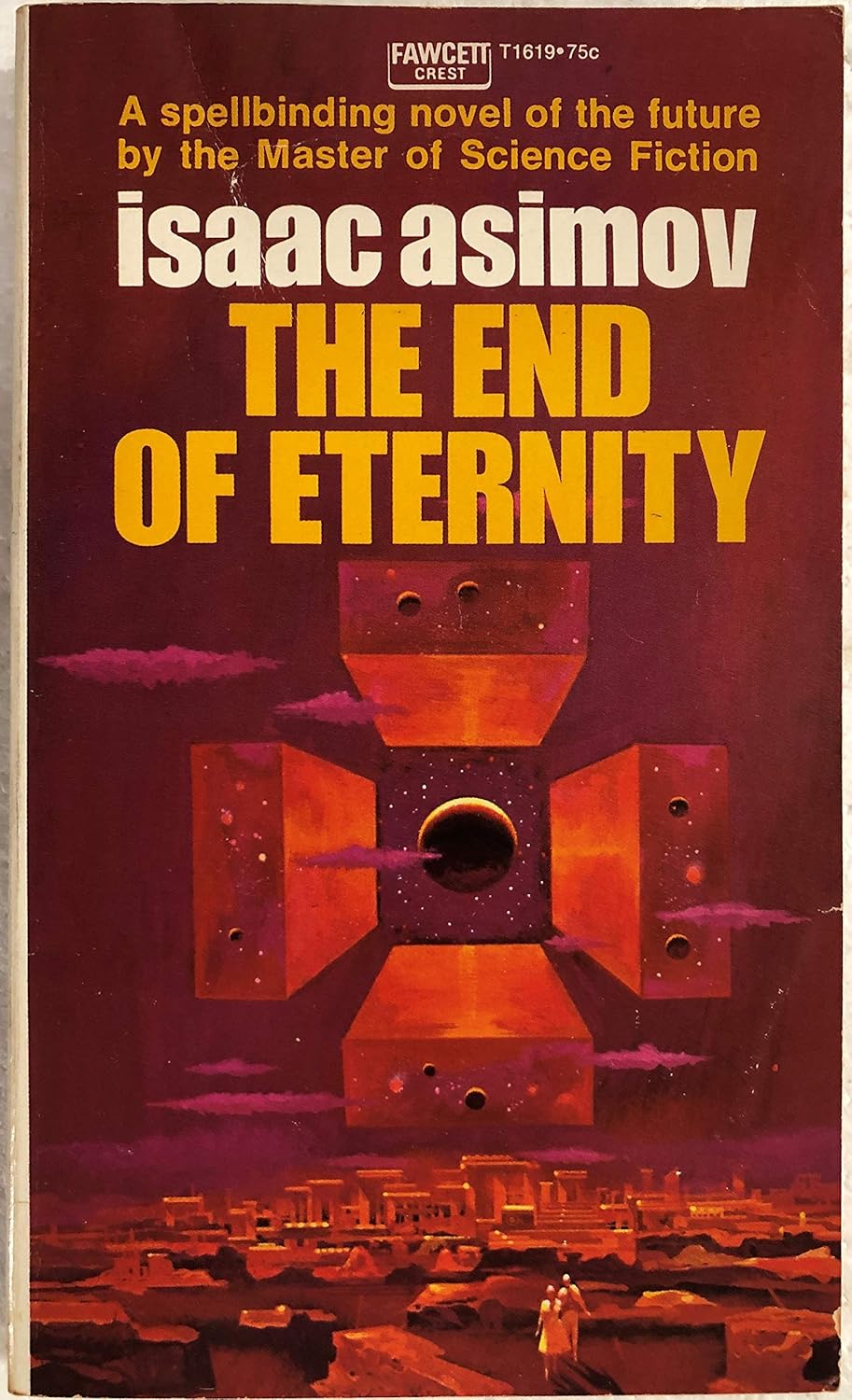
9. The End of Eternity by Isaac Asimov (1955)
Genre: Classic science fiction
Primary themes: Time manipulation, ethics of social engineering, free will vs. stability
One-Sentence Review: A concise exploration of the ethics of controlling history and the tension between engineered safety and human freedom.
What You Can Expect:
- Thoughtful, clear prose with scientific and moral speculation.
- A plot centered on temporal interference and its consequences.
- Philosophical questions about determinism and agency.
Its philosophical engagement with a manipulated history echoes The Sirens of Titan’s themes of free will and fate. Although Asimov’s tone is less satirical, lovers of existential sci fi recommendations will appreciate its probing questions about human freedom.
10. The Sparrow by Mary Doria Russell (1996)

Genre: First-contact literary science fiction
Primary themes: Faith, cultural misunderstanding, moral consequence, theodicy
One-Sentence Review: A morally complex and emotionally powerful tale that wrestles with faith and suffering through a tragic first contact with alien life.
What You Can Expect:
- A sober, reflective tone balancing scientific inquiry and spiritual anguish.
- Moral puzzles about responsibility, cultural conflict, and suffering.
- Use of an interplanetary setting as a stage for ethical and philosophical exploration.
Though less comic, its profound engagement with theological and existential questions mirrors Vonnegut’s concerns in The Sirens of Titan. This book is a rich philosophical sci fi book for readers drawn to complex moral reflection amid cosmic settings.
Conclusion
These 10 books to read if you love The Sirens of Titan each capture key aspects of what makes Vonnegut’s novel so enduring: the marriage of dark humor and absurdism as tools for social and cosmic satire; philosophical engagement with free will, human purpose, and cosmic irony; and the use of speculative or interplanetary satire novels as a lens on humanity. Whether through Vonnegut’s sharp wit or other authors’ moral investigations, these books invite readers to reflect on the big questions in science fiction’s language—offering thoughtful, darkly comic, and profound journeys.
If you loved The Sirens of Titan and seek your next depth-filled laugh or existential rumination, this list represents the best in absurdist sci fi novels, philosophical sci fi books, and existential sci fi recommendations—ensuring your reading explores the uniquely Vonnegut-inspired blend of cosmic satire and human inquiry.
Explore these titles, expand your horizon, and dive back into the wonderfully strange universe where meaning is elusive, and humor is the last human refuge.


