


10 Books to Read If You Love Neuromancer
Neuromancer, published in 1984 by William Gibson, is a groundbreaking novel that essentially birthed the cyberpunk genre. It introduced revolutionary concepts such as cyberspace, jacking in to virtual networks, and ICE (Intrusion Countermeasure Electronics), weaving these innovations into a gritty tale of hacker Case navigating a dystopian world dominated by powerful corporations and enigmatic artificial intelligences. These pioneering ideas reshaped science fiction, influencing countless works centered on hackers, virtual realities, and cybernetic futures.
The novel’s enduring appeal lies in its vivid portrayal of a high-tech, underworld society where the line between humans and machines blurs, drawing readers who crave immersive, tech-heavy, and hacker-driven stories set in bleak yet fascinating futures.
This post presents 10 books to read if you love Neuromancer, including books like Neuromancer, William Gibson similar books, and must-read cyberpunk novels. Whether you seek the roots of classic sci-fi cyberpunk or new explorations within the genre, these recommendations are crafted to fuel your appetite for neon-lit dystopias, AI conspiracies, and virtual heists.
What Are These Book Recommendations Based On?
The books like Neuromancer listed here share essential characteristics that echo Gibson’s cyberpunk masterpiece. Central themes unite them: cyberpunk motifs such as hacker culture jacking into virtual realms, omnipresent corporate overlords, interactions with artificial intelligences, and the uneasy merging of human consciousness with technology.
Beyond thematic overlap, these novels mirror the tone and immersive style of Neuromancer—a rich, noir-tinged narrative atmosphere featuring techno-underworlds, heists, and philosophical inquiries into identity and existence in digital and physical planes alike.
Selections include both classic sci-fi cyberpunk works from the genre’s 1980s heyday and modern cyberpunk novels that reinterpret or expand the scope of hacker-driven storytelling. This curated spectrum ensures a robust lineup suited for readers searching for compelling William Gibson similar books or contemporary cyberpunk hits.
Each story transports you to gritty, hyper-connected futures with complex world-building, embracing the cybernetic, AI, and virtual reality innovations that define if you liked Neuromancer fiction. These books directly satisfy the desire for layered, speculative fiction focused on technology’s shadowy intersection with human nature.
1. Snow Crash by Neal Stephenson (1992)

Genre: Cyberpunk / Satire
Themes: Virtual reality metaverses, corporate anarchies, ancient linguistic hacking, info-plagues.
One-Sentence Review: A razor-sharp cyberpunk romp blending hacker heists with mythological code-cracking in a fractured America.
What You Can Expect From This Book:
- Hacker protagonist Hiroaki “Hiro” Protagonist battles a Sumerian virus in an expansive Metaverse, paralleling Case’s matrix dives in Neuromancer.
- A dystopian sprawl of franchised city-states ruled by megacorporations reflects the corporate dystopias Gibson imagined.
- Immersive, neon-lit tech-fetishism and street samurai archetypes recall the textured atmosphere found in Neuromancer.
- The novel explores neuro-linguistic programming as a form of cybernetic enhancement, blurring the line between mind and machine.
Snow Crash perfectly captures the essence of Neuromancer. If you want books like Neuromancer rich in hacker culture and virtual reality intrigue, Neal Stephenson’s classic is an indispensable read. It stands as a defining entry among William Gibson similar books prized by fans of cyberpunk novels.
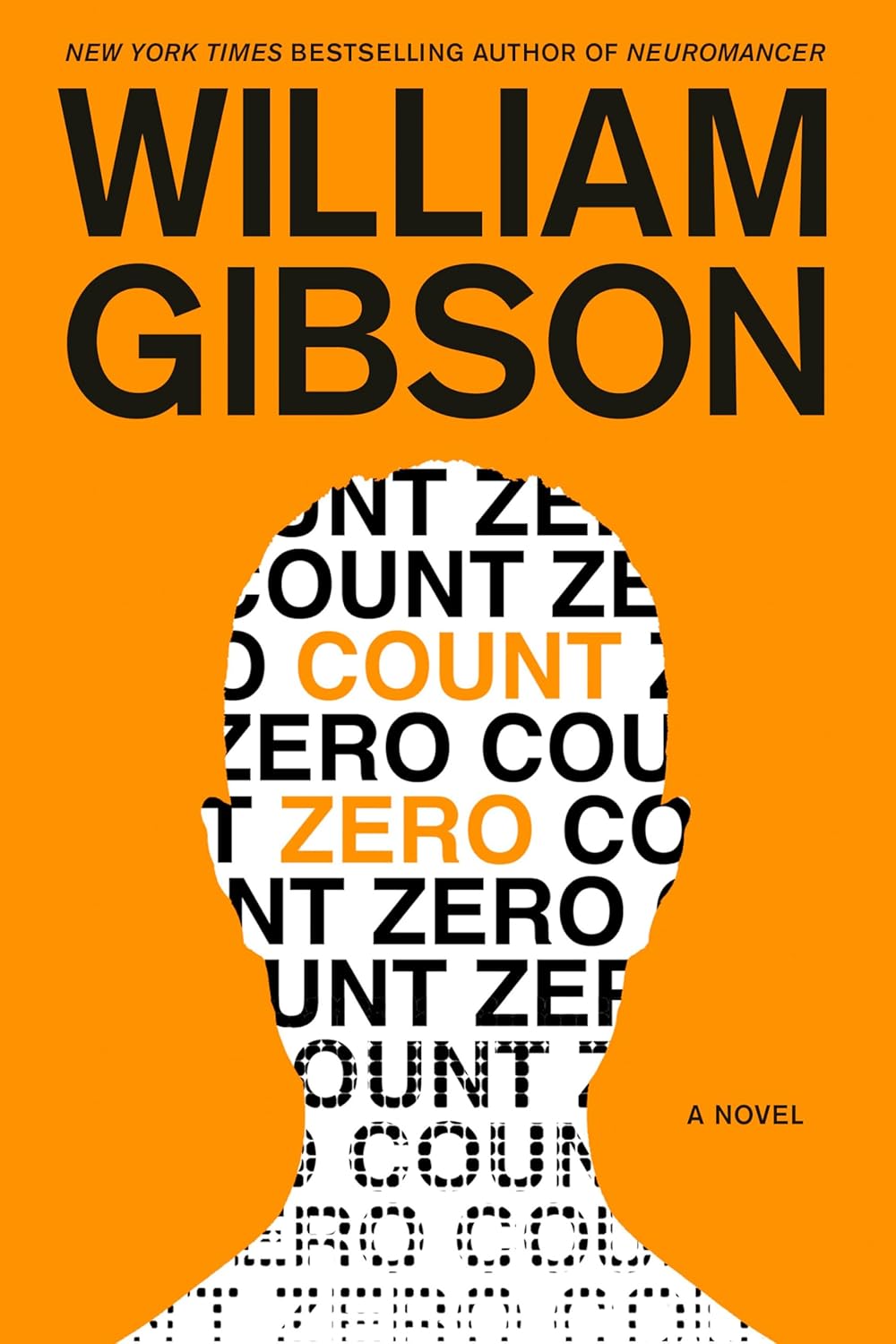
2. Count Zero by William Gibson (1986)
Genre: Cyberpunk
Themes: AI voodoo gods in cyberspace, corporate espionage, underground mercenary plots.
One-Sentence Review: The second installment in Gibson’s Sprawl trilogy weaves voodoo-haunted hacks and mercenary intrigue against evolving matrix powers.
What You Can Expect From This Book:
- Protagonists Turner and Bobby Newmark hack against megacorporate forces, extending the narrative legacy of Case.
- The blending of African loa spirits with emergent AIs deepens the cybernetic spirituality first glimpsed in Neuromancer.
- Gibson’s atmospheric prose fleshes out habitats like Freeside and data heavens with vivid detail.
- Characters enhanced by cyberware confront philosophical AI questions, echoing Wintermute’s consciousness in Neuromancer.
As a key classic sci-fi cyberpunk follow-up, Count Zero immerses readers in the evolving cybernetic underworld first unveiled in Neuromancer. It remains essential for those seeking books like Neuromancer and authentic William Gibson similar books steeped in digital mysticism and noirish hacks.
3. Altered Carbon by Richard K. Morgan (2002)

Genre: Cyberpunk / Noir
Themes: Consciousness transfer via body “sleeves,” immortal elite corruption, hacking cortical stacks.
One-Sentence Review: A hardboiled detective uncovers conspiracies while inhabiting different bodies, blending noir with cybernetic complexity.
What You Can Expect From This Book:
- Takeshi Kovacs, a former Envoy, jacks into new bodies, akin to Case’s neural interfaces in Neuromancer.
- A dystopian Bay City dominated by orbital corporations that exploit stacked consciousness, reflecting megacorp dystopias.
- Gritty, immersive world-building populated by mirror-shade assassins and simstim dives.
- Heavy focus on cortical implants and AI butlers that challenge the nature of human identity.
Altered Carbon resonates strongly with the themes of Neuromancer, especially cybernetic body-swapping and hacker revelations. For lovers of cyberpunk novels seeking fresh twists, this modern classic is a vital addition to books like Neuromancer collections.
4. Do Androids Dream of Electric Sheep? by Philip K. Dick (1968)

Genre: Cyberpunk Proto / Sci-Fi
Themes: Android empathy tests, decayed post-apocalyptic worlds, philosophical identity quests.
One-Sentence Review: In a radioactive future, bounty hunter Deckard navigates moral ambiguity while hunting rogue androids.
What You Can Expect From This Book:
- Deckard’s role retiring rogue AIs anticipates the hacker confrontations seen in Neuromancer.
- A dystopian San Francisco rife with “kipple” (junk) and off-world corporate interests provides bleak world-building.
- The decayed urban environment shares thematic kinship with Gibson’s Sprawl.
- Philosophical exploration of artificial intelligence and human empathy mirrors AI themes in Neuromancer.
As a classic sci-fi cyberpunk precursor, Dick’s novel laid groundwork that Gibson built upon. An essential William Gibson similar book, it belongs in any list of foundational books like Neuromancer for its early probing of AI and identity.
5. The Ghost in the Shell (Novelization Basis) by Masamune Shirow (1989) (Manga Origins)

Genre: Cyberpunk
Themes: Ghost-hacking, cybernetic bodies, specialized espionage units battling rogue AIs.
One-Sentence Review: Major Kusanagi dives into Puppet Master conspiracies, fusing human consciousness and machine warfare.
What You Can Expect From This Book:
- Thermoptic hackers penetrate “ghost” barriers in a manner reminiscent of matrix-breaking in Neuromancer.
- Neo-Tokyo’s dystopia is dominated by megacorporations and cybernetic street gangs.
- The narrative immerses readers in stealth tactics, cybernetic enhancements, and high-tech espionage.
- Major Kusanagi’s internal struggle with AI sentience closely parallels Wintermute’s evolution in Gibson’s work.
Ghost in the Shell amplifies the psycho-cybernetic themes for which Neuromancer is renowned. It’s a must-read for fans of cyberpunk novels seeking intense, cerebral cybernetic investigations and body-mind fusions.
6. Mona Lisa Overdrive by William Gibson (1988)

Genre: Cyberpunk
Themes: Simstim stars, AI-driven matrix warfare, global cyber-heists.
One-Sentence Review: The conclusion to the Sprawl trilogy entwines rockers, AI constructs, and digital battles against corporate overlords.
What You Can Expect From This Book:
- Characters like Slick Henry and Kumiko navigate sprawling surveilled habitats echoing Case’s earlier exploits.
- The backdrop spans from neon-lit Night City to London sprawls, under the shadow of zaibatsu control.
- Gibson’s dense, sensory-rich prose envelops readers in a hallucinatory technoscape.
- The narrative focuses on cybernetic rockers and AI conflicts akin to those found throughout the trilogy.
As the finale to Gibson’s Sprawl trilogy, Mona Lisa Overdrive intensifies and completes the foundational classic sci-fi cyberpunk storytelling started by Neuromancer. It’s a definitive choice for those seeking immersive books like Neuromancer and authentic William Gibson similar books.
7. Hardwired by Walter Jon Williams (1986)

Genre: Cyberpunk
Themes: Neural jacking, orbital drop mercenaries, corporate wars over Earth’s skies.
One-Sentence Review: Sarah Le Faye pilots heavily modified jets in a rebellious fight against orbit-spanning megacorporations.
What You Can Expect From This Book:
- Protagonists utilize neural jacks to pilot crafts and hack orbital systems, reminiscent of cybernetic interfaces in Neuromancer.
- The fractured dystopian America is riddled with orbital satellites broadcasting propaganda.
- Detailed action sequences involving delta-V burns and ICE-protected networks echo Gibson’s high-tech battles.
- Cyber-enhanced mercenaries blur the boundary between human and machine, emphasizing posthuman themes.
Hardwired elevates the high-flying cyberpunk action and hacking scenarios pioneered in Neuromancer, making it a powerful representative of classic sci-fi cyberpunk for readers seeking books like Neuromancer.
8. Synners by Pat Cadigan (1991)

Genre: Cyberpunk
Themes: Brain-socket viruses, media net breakdowns, fusion of humans and technology.
One-Sentence Review: A viral stroke infects those jacked into the media net, creating chaos among video punks and socket surgeons.
What You Can Expect From This Book:
- Characters overload neural sockets with data, evoking the sensory excess and net jacking from Neuromancer.
- Los Angeles sprawls populated by ad-hacking gangs and collapsing realities mirror Gibson’s gritty urban settings.
- Cadigan’s intense, punk-infused prose plunges readers into psyches merged with networking tech.
- AI evolutions spring from uploaded human consciousness, probing identity and consciousness themes.
Synners captures the viral, neural-hacking vicissitudes that will appeal strongly to those who liked Neuromancer, making it a standout among cyberpunk novels centered on media and brain-interface themes.
9. The Diamond Age by Neal Stephenson (1995)

Genre: Cyberpunk / Post-Cyberpunk
Themes: Nanotechnology, interactive AI books, hacker revolutions within fracturing tribal societies.
One-Sentence Review: Young Nell’s interactive primer ignites her journey through nano-fed phyles clashing with digital swarms.
What You Can Expect From This Book:
- Nell uses an AI-driven primer to hack and interact with nanotechnology on a matrix-like scale.
- The novel’s neo-Victorian dystopia presents culturally segmented phyles in a world reshaped by media collapse.
- Stephenson’s intricate and detailed world-building echoes the richness of Gibson’s Sprawl.
- Cybernetic feeds and nano-tech enhance traditional themes of rebellion and identity stored in tech.
The Diamond Age evolves Neuromancer’s cyberpunk roots into nano-scale realms and interactive AI, a smart choice among William Gibson similar books and must-read classic sci-fi cyberpunk for the genre-curious.
10. Deep State by Marc Ambinder & D. B. Grady (2020)

Genre: Near-Future Cyberpunk Thriller
Themes: Augmented law enforcement, drone warfare, AI predictive policing.
One-Sentence Review: FBI agent Kendra teams up with an AI assistant to dismantle deepfake plots in a city swamped by surveillance.
What You Can Expect From This Book:
- Agents augmented with AR and AI tools crack encrypted digital terror networks.
- The federated cityscape is dominated by corporate interests and viral deepfake misinformation.
- Immersive simulations and autonomous bot alliances underscore the blurred lines between law enforcement and hackers.
- Hacker AIs complicate morality, reflecting Neuromancer’s AI themes in a modern technoscape.
Deep State offers a contemporary, realistic take on cyberpunk themes of AI surveillance and cyber-crime, making it a resonant choice for readers seeking books like Neuromancer set in near-future realities.
Conclusion
Neuromancer remains the progenitor and guiding star of cyberpunk, its visionary matrix hacks, AI consciousness ideas, and corporate dystopias continuing to inspire readers and creators alike. The 10 books to read if you love Neuromancer here extend and elaborate on Gibson’s legacy, ranging from the pulsing neon-lit streets of classic sci-fi cyberpunk to fresh, innovative cyberpunk novels.
Whether you want gritty hacker thrillers, philosophical AI explorations, or immersive dystopian worlds, these titles offer rich narratives that deepen your connection to the genre. If you liked Neuromancer, diving into these selections will expand your appreciation for cyberpunk’s varied and electrifying storytelling.
Explore these books like Neuromancer and William Gibson similar books to continue hacking your way through the high-tech, neon-lit futures that define the heart of cyberpunk novels.


